Verification in Legal AI Is a Design Problem
Lawyers remain responsible. Legal AI should make its work easy to check before they sign.
By Harry Raworth, Co-Founder of Mary Technology. Originally published on LinkedIn, 13 August 2026.
When legal AI gets something wrong, everyone looks at the lawyer. Fair enough. They are the person filing the work or relying on it.
But I think the conversation stops one step too early. We ask why the lawyer didn’t check it. We don’t ask nearly enough about whether the product made checking practical in the first place.
A lawyer may fail to check an answer properly. A vendor may also have built a product that makes proper checking slow, opaque or unrealistic. If the system produces a polished conclusion, hides the limits of the search and leaves the user to reconstruct the underlying work, verification has simply been pushed back onto the lawyer.
We have already seen the problem in very different settings. In 2025, Lacey v. State Farm involved lawyers at an AmLaw 100 firm and a Los Angeles litigation boutique. The firms were ordered to pay $31,100 after a brief containing invented authorities was prepared using AI tools, including paid, purpose-built legal research products. Experienced lawyers were using technology built for legal work, but the material still reached the court.
In Australia, the Federal Court’s April 2026 generative AI practice note makes the other side of the position clear. Anyone using generative AI remains responsible for the material they file and may be required to explain what tool was used, how it was used and for what purpose.
I agree with that. A vendor cannot take the place of a lawyer’s judgment or duty to the court. But that should not be the end of the conversation. Vendors should carry a separate responsibility for whether their products make verification practical.
I hear vendors say that a human remains in the loop. On its own, that tells me almost nothing.
What does the human actually see? Can they open a material proposition to the source page and read the surrounding passage? Can they see which documents were supplied, which were processed, which were excluded and what expected material was not found? Do conflicts remain visible, or are they flattened into one confident sentence?
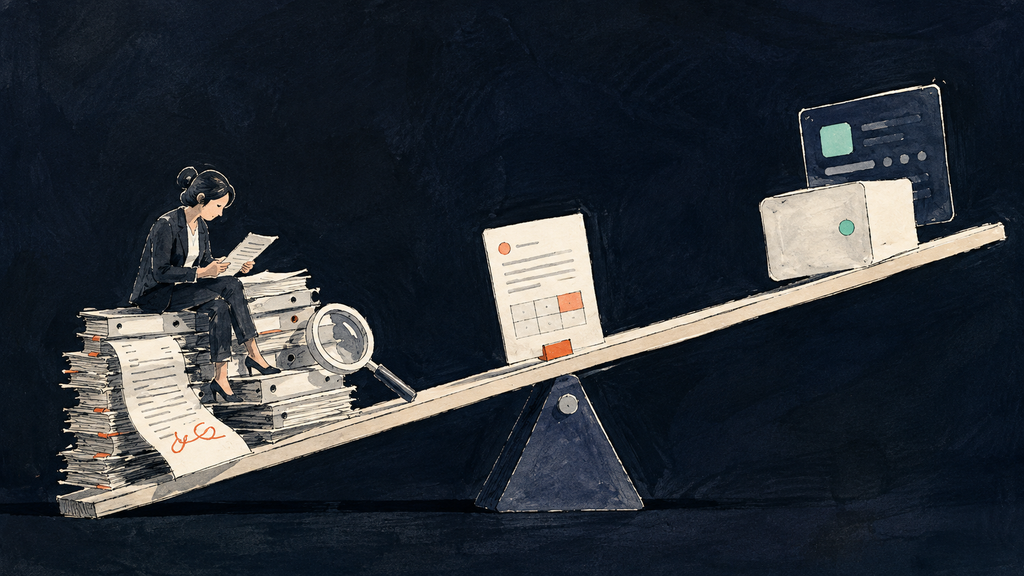
If the lawyer has to reopen the full record, recreate the search and work out what the system may have missed, the vendor has not really designed a verification workflow. It has just moved most of the verification work back onto the customer.
A 2026 survey of 850 senior legal professionals found that 67 per cent were concerned the cost of human verification and oversight could outweigh AI’s efficiency benefits. Almost half said people always or often materially changed AI output before use.
AI can still save substantial time. The point is that vendors should be judged on the time to usable work, not simply the time to first draft.
A legal AI vendor should be able to explain how its product makes a claim checkable.
The source should be visible in context, and the lawyer should also be able to see the scope of the work. A source link tells the lawyer what supports a proposition. It doesn’t tell them what the system never searched, could not read or failed to find.
The checking process should also be capable of reaching a different result. Asking the same model to approve its own answer isn’t much of a control if it repeats the same assumptions. When support fails, the product should have a clear response. It may block, warn or escalate, but the problem should stay attached to the work.
Vendors should also be careful about the claims they make. A benchmark score is not the same as a lawyer being able to inspect a specific output in the time available. ‘Grounded’ isn’t enough if the user cannot see the source, the search scope and the unresolved issues.
None of this sits outside the vendor’s control. It comes down to how the product has been built.
The test I would use isn’t a polished demonstration on a matter chosen by the vendor. I’d start with a matter the firm already knows.
Use a closed, de-identified or internally approved matter. Keep the known gaps and conflicts private. Ask the product to produce work the team can check against its own knowledge. Then look at what it found, what it missed, what remained unresolved and how long it took to reach work the lawyers were prepared to use.
A vendor that’s confident in its product should welcome that test.
Lawyers will continue to carry professional responsibility for the work they adopt. That should not change. But vendors should carry responsibility for whether their products make that work practical to verify.
The lawyer should own the judgment, but vendors need to own the design that makes the judgment possible.
