Verification in Legal AI Is a Design Problem
Lawyers remain responsible. Legal AI should make its work easy to check before they sign.

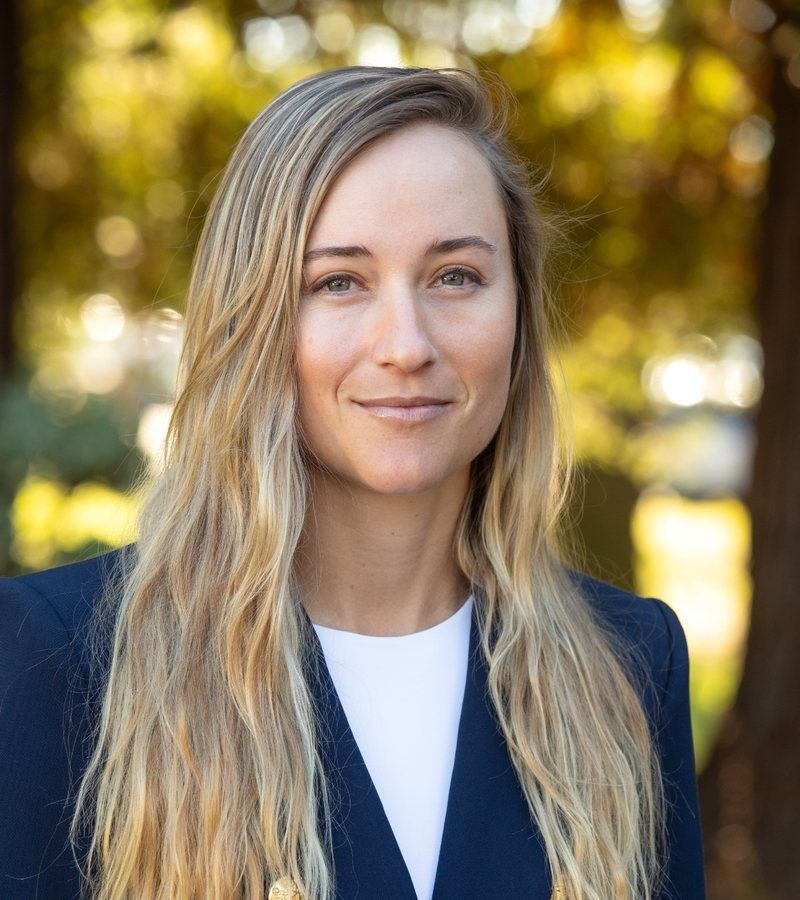
SAN FRANCISCO, September 8, 2026: Mary Technology today named Catherine Thompson Head of Mary Legal, U.S. Thompson joins from Blevans, Itzkowitz & Cantrell, LLP, where she represented clients in complex matrimonial disputes. She takes responsibility for the standard Mary’s work must meet before an American lawyer adopts it.
Her appointment sets Mary’s position in a market that mostly sells the opposite. Legal AI largely competes on how much of the lawyer’s work a system can absorb. Mary is built on the belief that a fact is never just a fact. It is a reflection of both the negative space around it and the rigor of the process used to weigh it. As litigators and non-litigators know, every fact carries a source, a context, and questions that may never resolve. It is an attorney’s obligation, in and out of litigation, to keep hold of the judgment required to interrogate and weigh that negative space.
That obligation is now written into the rules and priced by the courts. New York’s rule on the use of artificial intelligence in the courts took effect on June 1, 2026. A public database of court decisions involving hallucinated AI material stood at 1,796 entries as of July 23, 2026. It includes a Federal Court of Appeals matter, a case in which both sides filed fabricated citations, and sanctions in the five figures per attorney. The lawyer who files still answers for what was filed.
“Catherine has built the facts of a matter the long way, from valuations, ledgers, and income records. She knows what a lawyer needs to see before putting their name to the work. Most systems in this category are designed to sound settled. Ours is designed to be honest about what isn’t. Catherine now owns that standard in the United States.”
Daniel Lord-Doyle, CEO, Mary Technology
Thompson’s practice ran on the living factual record. At Blevans, Itzkowitz & Cantrell in Santa Rosa, California, her work centered on closely held business valuations, transactions, and complex income streams in high-net-worth divorce, a practice unique in American litigation because the factual record evolves throughout a case. Before that she spent nearly four years at Ain & Bank, P.C. in Washington, D.C., on complex family law disputes across Maryland, Virginia, and the District of Columbia, including the valuation, division, and restructuring of closely held businesses and estate planning mechanisms. Catherine began her career at Allen & Overy (now A&O Shearman) in international capital markets and asset management. She holds a J.D. from the University of Virginia School of Law.
“A confident answer and a correct one look identical on the page. In legal practice, as in life, the facts are rarely settled. They conflict, they run out, and what is missing is often the thing that decides a case. Any system, AI or otherwise, that smooths away factual ambiguities or contradictions is doing the lawyer’s thinking for them. Mary is built to show the ambiguity and leave the judgment where it belongs, with humans.”
Catherine Thompson, Head of Mary Legal, U.S.
Mary is the factual record for litigation. It accounts for every document, updates the matter’s factual layer as new material arrives, and keeps contradictions, gaps, and unresolved questions visible rather than flattening them into a confident answer. Every finding opens to its source. What the system did not check stays visible. Proposed queries stay pending until a lawyer approves them.
Thompson is based in the San Francisco Bay Area and joined Mary in July 2026. She is available for interview on verification standards in legal AI, court and bar guidance on AI use, and the effect of AI-assisted work on how lawyers and legal staff build judgment.
Mary is the factual record for litigation. It accounts for every document and generates a factual matrix that evolves as new material arrives, showing what the evidence supports, contradicts, and leaves unresolved. Lawyers can trace every finding to its source, review proposed queries, record changes, and preserve a clear history of the matter. The maintained record supports timeline construction, witness preparation, case strategy, drafting, and other fact-leveraged work. Mary can be used directly or inside the systems and AI tools a firm already uses, so teams can move between tasks and tools without rebuilding the matter or creating competing versions of the facts.
Learn more at marytechnology.com.