Verification in Legal AI Is a Design Problem
Lawyers remain responsible. Legal AI should make its work easy to check before they sign.
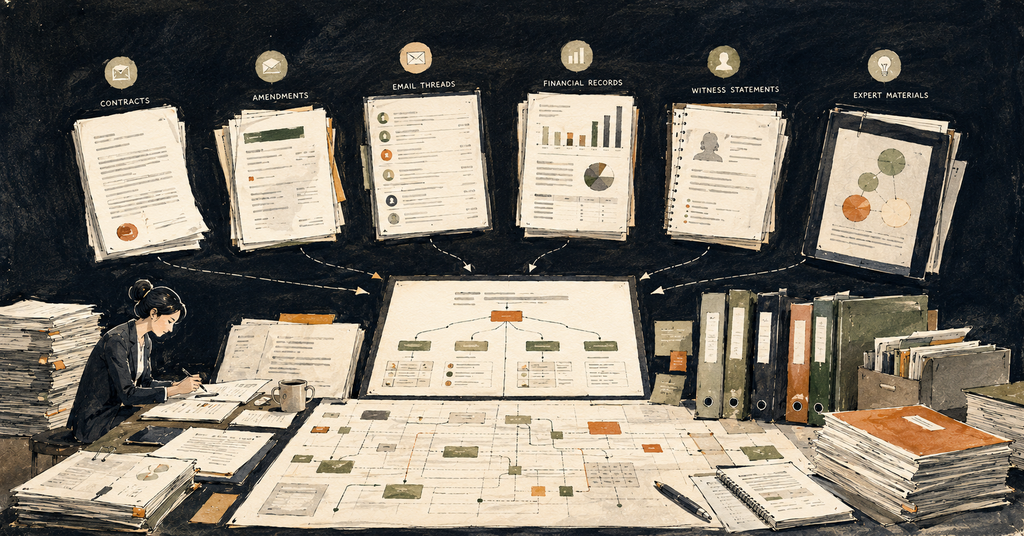
Commercial litigation often has several document systems and no single reviewed account of the facts that survives from early case assessment to hearing. The pleadings contain one version. The document review platform contains responsive files and coding decisions. Witness preparation creates another set of notes. Experts work from selected assumptions. The chronology changes as new evidence arrives. By mediation, several teams may have rebuilt overlapping versions of the same matter. A factual record gives those stages a shared starting point. It should develop with the dispute, keep factual propositions tied to their sources and preserve the legal team's corrections without pretending that factual judgment can be automated.
Consider a dispute between a software supplier and a national retailer. The signed contract sets delivery milestones. Two amendments alter the timetable. Side correspondence discusses an informal extension, but the parties disagree about whether it was accepted. Several witnesses attended meetings on disputed dates. One email refers to an attachment that is missing from the production. Financial records show delayed payments and disputed offsets. Each side has retained an expert to address loss. This is a hypothetical matter, but the information problem is ordinary. No single document tells the story. The factual account has to be assembled across contracts, communications, financial records, witness evidence and expert assumptions. A chronology can arrange the events. It will not, by itself, preserve every conflict, show why an event matters to an issue, record which documents were unavailable or carry the team's corrections into later work.
At the start of the matter, the team is usually working from incomplete instructions and a limited document set. The first factual record should therefore be provisional. It can identify the parties, contractual structure, alleged breaches, important dates, known witnesses and the evidence presently available for each proposition. It should also show the limits of that account. In the hypothetical dispute, the signed contract and amendments may be available while the side correspondence is incomplete. The date of one meeting may come only from a witness recollection. A payment schedule may not reconcile with the invoices supplied. Recording those conditions early prevents a working assumption from quietly becoming an established fact. It also gives the team a more precise list of what to request from the client or investigate next. The Federal Court of Australia's Commercial and Corporations Practice Note emphasises early identification of the issues actually in dispute and efficient case management. A structured factual account can support that work, while the lawyers still decide which issues are material and what position to take.
Pleadings convert the client's account into allegations and denials. The factual record should preserve the distinction between what is alleged, what is supported and what remains uncertain. For example, the retailer may allege that the supplier missed a contractual milestone. The supplier may rely on an agreed extension. The record should not collapse those positions into a single date. It should show: the original milestone in the contract. the amendment, if any. the communications said to create the extension. each party's account of the relevant meeting. the present evidentiary status of the proposition. The pleading is one legal use of that material. It is not the complete factual record. Later evidence may strengthen, qualify or displace the factual basis on which the pleading was prepared.
Discovery can multiply the amount of material without immediately improving the team's understanding of it. The EDRM model describes identification, preservation, collection, processing, review, analysis, production and presentation as an iterative process. Those functions are necessary for managing electronically stored information. The factual record addresses a different question: what does the material, once available, establish about the dispute? As documents are reviewed, the system should connect newly surfaced evidence to the existing account. A later email may confirm the extension. A calendar invitation may contradict a witness's meeting date. The missing attachment may appear in another custodian's mailbox. Financial records may show that an asserted offset was calculated differently at the time. The record should preserve those changes and the source for each one. The eDiscovery platform remains responsible for the review population, coding, privilege and production process. The factual record carries the reviewed account into the rest of the matter. The separate roles are mapped in eDiscovery, Document Management and the Factual Record: Which System Does What?.
Witness preparation exposes a common problem with temporary factual work. One team member prepares a chronology. Another creates a witness folder. A partner marks up a draft statement. Counsel identifies a contradiction in conference. The correction may never make its way back into the materials used by the rest of the team. A persistent factual record should let the team connect each witness account to the contemporaneous documents and to other accounts of the same event. Where a witness changes or qualifies a recollection, the record should preserve what changed, who approved it and which later work should use the reviewed position. That does not determine whether the witness is credible. It gives the lawyer a visible basis for testing the account. The correction process is discussed in When a Lawyer Corrects the AI, Where Does the Correction Go?.
Experts often receive a set of assumed facts, selected documents and instructions framed around a defined question. If the factual assumptions change, the team needs to know which opinions may be affected. In the hypothetical dispute, a damages expert may assume that the contractual extension was not agreed. A new email may make that assumption harder to maintain. A factual record can show which expert assumption depends on which factual proposition and source. The lawyer and expert still determine whether the new material changes the opinion. The system makes the dependency visible before the issue appears in cross-examination. The same discipline applies to technical experts. A conclusion about system readiness may depend on a test report, a delivery date and a particular definition in the contract. Those elements should remain connected rather than being carried into the report as an unexplained premise.
Later work should reuse the factual work already completed. A mediation paper, witness outline or submission may present a selective argument. The underlying record still needs to contain the competing evidence, unresolved gaps and source history. Otherwise, each new work product becomes another opportunity to rebuild the matter and lose a qualification added earlier. For US federal litigation, Rule 26 of the Federal Rules of Civil Procedure structures disclosure and discovery around the claims and defences in the action. The governing rules and procedure will differ by jurisdiction, but the operational need is similar: the team has to connect the material produced to the propositions that will matter at deposition, motion practice or trial. The factual record can support: testing whether a proposition is supported by admissible or available material. locating the document that changes a witness account. identifying an unresolved factual dependency in an expert opinion. preparing source-linked questions. checking whether a new draft relies on an outdated factual position. The advocate decides what to use and what it means.
Commercial disputes do not move through clean stages. New documents arrive after witness preparation. An expert raises a question that sends the team back to discovery. A pleading amendment changes the issues. A lawyer corrects an entity or date that appears in several work products. The record therefore needs history as well as content. The team should be able to see the current reviewed position, the source on which it depends and the change that produced it. That is the difference between regenerating an answer from the documents and maintaining a factual account across the life of the matter.
Mary is built to create and maintain the factual record for litigation. It reads across the matter materials, structures factual propositions and keeps them connected to the underlying source. Lawyers review the record, correct it and use it across chronologies, analysis and later work product. Mary does not replace the document management system or the eDiscovery process. It does not decide which witness to believe or which theory to run. It gives the legal team a persistent factual account over which those decisions can be made. What Is the Factual Record of a Litigation Matter? sets out the category in more detail. The Two Clocks, in Litigation explains why capturing this work as it happens becomes more valuable as firms use more AI.